
 Give Feedback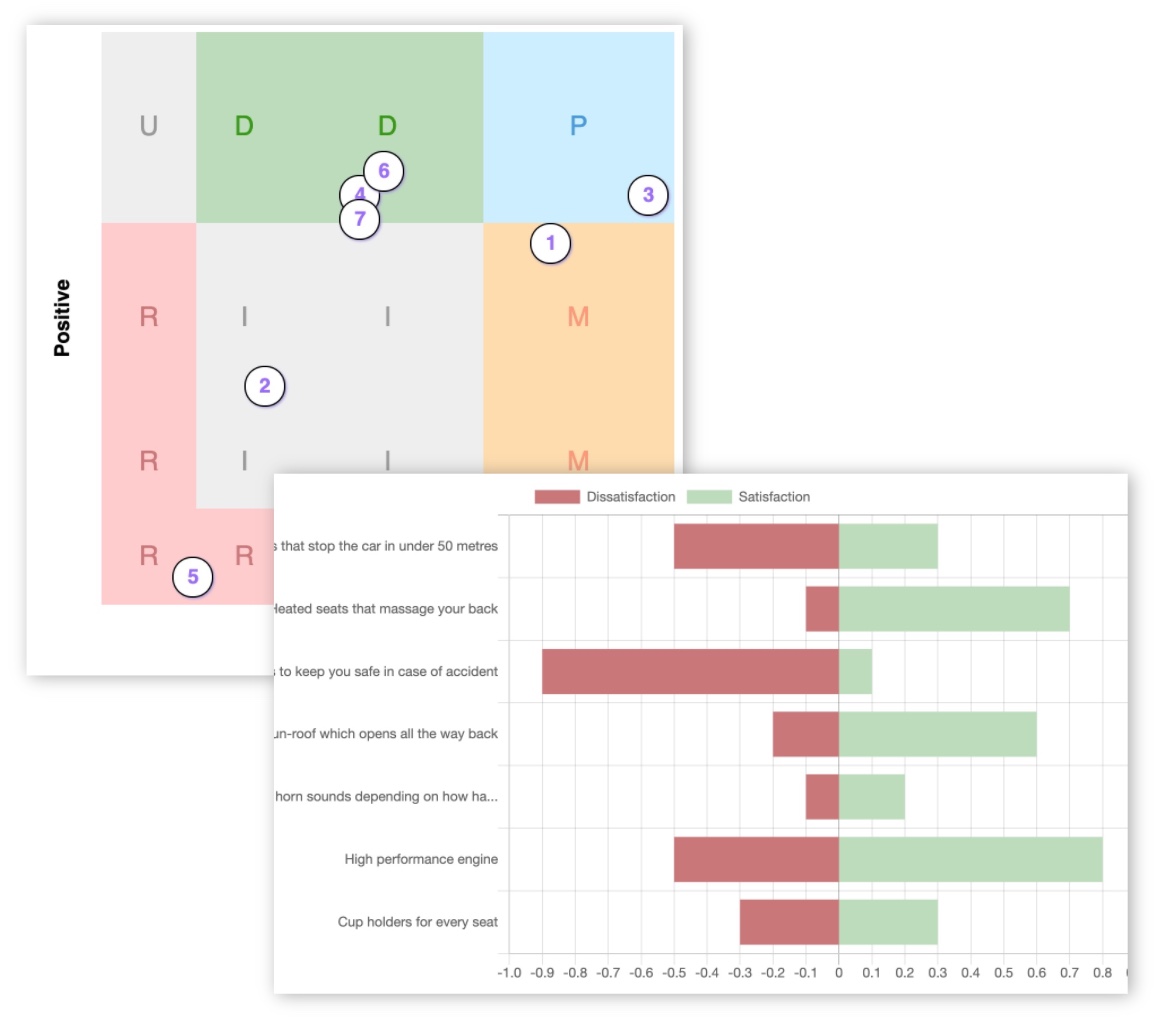
Reverse Features in the Kano Model: When Product Ideas Actively Reduce Customer Satisfaction
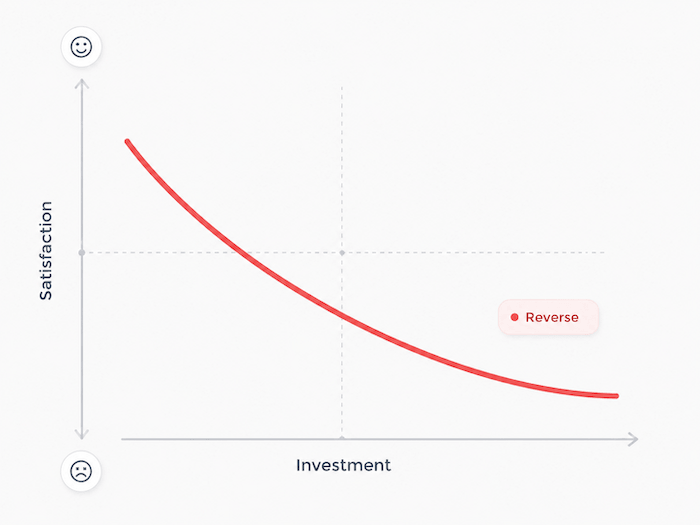
Reverse features are not just low-value ideas. They actively make the customer experience worse.
Product teams usually focus on the features customers want most: the basics they expect, the improvements they reward, and the occasional surprises that create delight.
The Kano Model helps make those decisions clearer by grouping features by satisfaction impact, not just by how good they sound in planning meetings.
One category is easy to underestimate: Reverse features. These are features that reduce satisfaction when present. They create friction, confusion, or mistrust, and can make the product feel worse instead of better.
That is what makes Reverse features different from low-impact ideas. Indifferent features waste effort. Reverse features actively push satisfaction in the wrong direction.
Quick recap: the 5 Kano Model categories
Kano usually groups features into five categories:
- Must-have: expected basics. Missing them causes dissatisfaction.
- Performance: better execution means higher satisfaction.
- Delighters: unexpected value that creates positive surprise.
- Indifferent: little impact either way.
- Reverse: features that reduce satisfaction when present.
The key distinction here is simple: Indifferent features do not move the needle. Reverse features move it backwards.
What are Reverse features?
A Reverse feature is any feature whose presence creates dissatisfaction, while its absence preserves or improves the experience.
This does not always mean the feature is universally bad. It may be useful for one segment and harmful for another. Advanced controls can delight experts but overwhelm beginners. Social sharing can work in community products but feel intrusive in private workflows.
So classification is contextual. It depends on audience, intent, timing, and product type. Many Reverse features begin as reasonable ideas, then fail because they conflict with what users are actually trying to do.
The psychology behind Reverse features
Reverse features often violate a user's mental model. People open products with clear goals: finish a task, save time, reduce risk, or stay in control. A Reverse feature interrupts that goal.
Common triggers are loss of control, cognitive overload, privacy discomfort, and constant interruption. Forced flows, too many options, aggressive prompts, and intrusive recommendations may each look minor in isolation, but together they create friction.
This is why Reverse features hurt CSAT quickly. Satisfaction is not based on technical sophistication; it is based on whether the experience feels helpful. Even a clever feature can lower trust if users experience it as pressure or noise.
Why Reverse features are not necessary in your product
Teams often justify Reverse features with internal goals: collect more data, drive upgrades, increase engagement, match competitors, or satisfy a stakeholder request.
Those goals are not automatically wrong, but they are risky when they override customer outcomes. A feature can improve a short-term metric while reducing retention, trust, and long-term value.
More functionality is not automatically more value. Strong teams ask, "Will this improve the customer's experience in this context?" If the answer is uncertain, treat the feature as a risk, not a win.
Examples of Reverse features in software products
Common software examples include autoplay media, forced account creation too early in the journey, excessive notifications, intrusive AI suggestions, and mandatory onboarding tours.
Complex dashboards and heavy configuration are another frequent trap. They can be valuable for expert users but overwhelming for everyone else. The same feature can be Performance for one segment and Reverse for another.
Dark-pattern upsells and difficult cancellation flows are also classic Reverse patterns. They may drive short-term actions, but they often damage trust and brand perception.
Examples of Reverse features in hardware products
Reverse features appear in physical products too. Touchscreen-only controls for basic car actions, app-dependent appliances for simple tasks, and overly bright indicator lights are common examples.
Other examples include overcomplicated remote controls, forced subscriptions for core hardware use, and product designs that add complexity without improving reliability or safety.
In hardware, Reverse features often look like overengineering: impressive on paper, frustrating in daily use.
How Reverse features happen
Reverse features usually come from solving the wrong problem, not from poor intent.
Typical causes include internal metric pressure, stakeholder requests without validation, competitor copying, and over-indexing on power-user feedback. Novelty can also be a trap when teams prioritise "new" over "clear and useful."
The pattern is consistent: business logic says "add it," customer experience says "this makes things harder."
Tips for avoiding Reverse features
The best prevention is early validation. Kano surveys are effective because they test both presence and absence. That often reveals dislike that standard interviews miss.
Segment your results. Averages can hide major differences between beginners and experts, buyers and daily users, or admins and end users.
Use prototypes and behavioral signals before full rollout. Hesitation, repeated dismissal, opt-outs, support tickets, and abandonment are all signs a feature may be Reverse.
Where possible, make risky features optional. Give users control to skip, configure, disable, or revisit later. Optional features can feel helpful; forced versions often feel hostile.
Finally, evaluate success with customer outcomes, not just internal metrics. If a feature raises clicks but lowers trust, it is probably the wrong trade-off.
Conclusion
Reverse features are critical to spot because they do active damage to satisfaction.
They make products feel slower, harder, less trustworthy, or misaligned with user goals. That is why they should be treated as risks to remove, not features to polish.
Strong products are not built by adding everything. They are built by delivering the right features, for the right users, with the least friction.
The best teams know when to build, when to make something optional, and when to leave an idea out entirely.
Want a quick refresher on all five categories? See the Kano chart (it's interactive!.
Want to identify ideas customers might actively dislike before you build?
Create your first Kano survey now