
 Give Feedback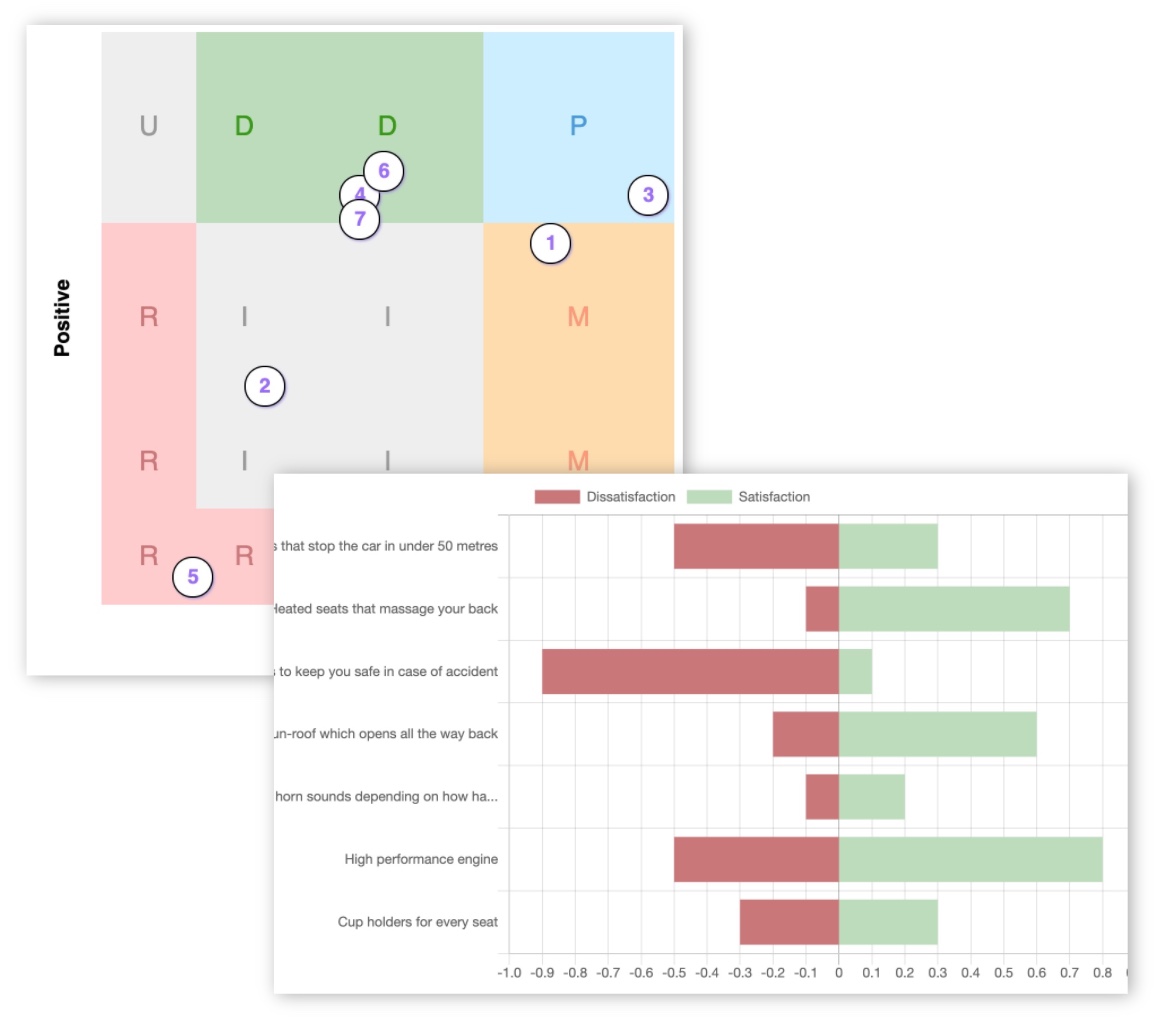
Must-have Features in the Kano Model: The Basics Customers Expect
Must-have features rarely create excitement, but they do decide whether customers trust your product at all.
Not all product features affect customer satisfaction in the same way.
Some create surprise. Some improve value in measurable ways. Some barely matter. Others are simply expected.
These are Must-have features.
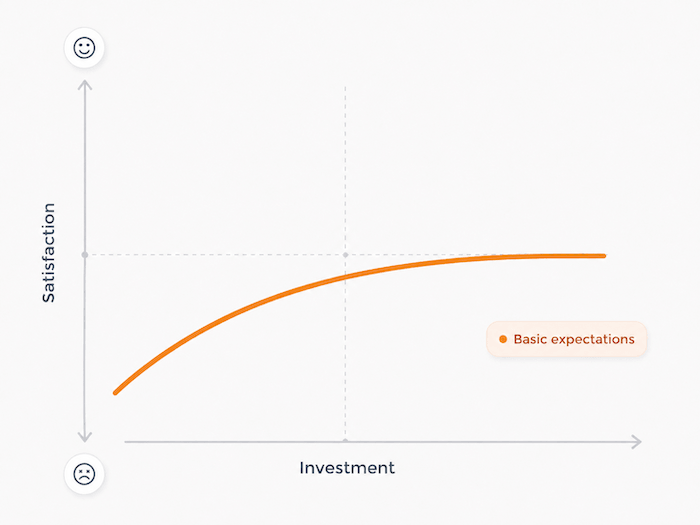
In the Kano Model, Must-haves are the basic expectations customers bring with them. People rarely praise you for including them, but if they are missing, broken, confusing, or unreliable, they notice immediately.
A product without its Must-haves can feel unfinished, unsafe, or untrustworthy. Must-haves do not usually create delight, but they protect the foundation everything else depends on.
A quick recap of the Kano Model
The Kano Model helps teams understand how different feature types influence satisfaction, because similar build effort can create very different customer reactions.
- Must-have features: the basics customers expect as a minimum.
- Performance features: features where better execution usually means higher satisfaction.
- Delighters: unexpected features that create positive surprise.
- Indifferent features: features customers do not care much about.
- Reverse features: features that make some customers less satisfied.
Must-haves are usually the least glamorous category, but they are often the most important to get right first.
What are Must-have features?
Must-have features are baseline capabilities, safeguards, and standards customers assume will be present. They are the cost of entry.
A SaaS customer expects password reset to work. An ecommerce shopper expects checkout to work. A hotel guest expects a clean room and hot water. A driver expects the brakes to work. These are not exciting features. They are basic expectations.
You may also see Must-haves called threshold attributes, hygiene factors, table stakes, or dissatisfiers. The core idea is the same: these features prevent dissatisfaction more than they create satisfaction.
They are often practical details rather than headline features: a reliable save button, clear invoicing, secure checkout, order confirmation, or a working room lock.
The psychology of Must-have features
Customers do not arrive with a blank mind. They bring expectations shaped by competitors, past experience, industry norms, reviews, pricing, marketing, and regulation.
If someone signs up for a banking app, they assume accurate balances, secure login, and payment confirmations. Those are not bonuses. They are part of what makes the product feel legitimate.
When Must-haves work, they sit below conscious attention. When one fails, it can dominate the whole experience. That is the asymmetry: presence feels neutral, absence feels unacceptable.
A password reset flow rarely delights anyone, but if locked-out users cannot recover access, they may leave for good. A broken checkout often kills the sale.
Must-haves also protect trust. When basics fail, customers begin to question the rest of the product. Reliable fundamentals signal competence.
Why Must-haves matter so much
A product can have clever Delighters and strong Performance features, but if the basics are weak, the overall experience still feels poor.
A hotel might have a beautiful bar and fast digital check-in, but if the room is dirty or there is no hot water, those positives do not compensate. The same logic applies in software.
A SaaS product might offer AI features, dashboards, and integrations. But if users cannot invite teammates, recover accounts, understand billing, or trust saved data, it feels immature.
Must-haves matter because they reduce churn, improve onboarding, protect credibility, lower support load, and make adoption feel safer. They create the conditions for every other feature category to matter.
Examples of Must-have features in software
Must-haves depend on product type, customer segment, and context. What is optional in one product may be mandatory in another.
In SaaS, common Must-haves include secure login, password reset, reliable data saving, clear billing, team invitations, sensible permissions, account cancellation, invoices, and support. For some products, export and backup are also Must-haves, especially when users store important business data.
In ecommerce, Must-haves include product images, descriptions, cart, checkout, payment security, delivery information, order confirmation, and returns information.
In banking and fintech, the baseline is higher: strong authentication, accurate balances, transaction history, payment confirmations, fraud protection, and compliance. In productivity tools, users expect autosave, undo, search, version history, file organisation, and cross-device access.
The context matters. A basic login may be enough for a lightweight consumer app. For enterprise software, single sign-on may be table stakes.
Examples of Must-have features in hardware and services
Physical products often have Must-haves tied to safety, durability, and compliance.
In cars, basics include brakes, seatbelts, headlights, wipers, reliable start, clear fuel or battery information, and safety compliance. Customers may compare cars on design or performance, but these foundations are non-negotiable.
In smartphones, people expect calling, charging, touchscreen responsiveness, secure unlock, and network connectivity. In home appliances, customers expect safe operation, clear controls, consistency, and easy cleaning. Wearables need reliable syncing, enough battery for promised use, and tracking accurate enough to trust.
Services have Must-haves too. A hotel guest expects a clean room, working lock, hot water, accurate booking details, and a safe environment. A delivery service must bring the right item to the right place in the promised window, or communicate clearly when plans change.
How Must-haves change over time
Kano categories are not fixed. Expectations change as markets mature.
A feature can begin as a Delighter, become a Performance feature, and later become a Must-have. Real-time delivery tracking is a good example. So are cloud sync, contactless payments, and two-factor authentication in security-sensitive contexts.
The usual drift looks like this:
- The feature starts as a Delighter because it is unexpected.
- It becomes a Performance feature as customers compare how well products deliver it.
- It becomes a Must-have once customers expect it by default.
Website speed is another clear example. Once it felt impressive. Now users simply expect fast pages. The same has happened with uptime, battery life, and delivery speed in many categories.
The reverse can happen too. Some Must-haves fade as technology changes. A Must-have is not a permanent law; it reflects current expectations.
How to identify Must-have features
Must-haves can be hard to spot because customers do not always mention them. If something feels deeply expected, people often assume it will be there and never think to ask for it.
Kano surveys help because they ask how customers feel if a feature is present and if it is absent. For Must-haves, the pattern is usually clear: presence feels expected, absence feels unacceptable.
Customer interviews help too. Listen for phrases like "I assumed it would...", "Surely it should...", or "That is basic." Support tickets, churn reasons, onboarding drop-offs, refund requests, and repeated sales objections are all strong signals.
Competitor analysis can help too. If nearly every credible product in a category includes something by default, that is often a clue the market sees it as table stakes.
Tips for designing Must-have features
The first rule is simple: do not chase delight before the basics work.
Delighters are valuable, but they cannot compensate for missing fundamentals. If checkout fails, a recommendation engine will not save the purchase. If users cannot reset their password, a beautiful dashboard will not matter.
Define the acceptable baseline. A Must-have does not need to be spectacular. It needs to be reliable, clear, secure, and easy to use.
Design for reliability over novelty. Must-have features should be boring in the best way: predictable, stable, familiar, and easy to understand.
Match the baseline to the segment. SSO may be essential for enterprise buyers and irrelevant for individual users. Audit logs may matter in regulated industries and not elsewhere.
Finally, monitor complaints more than compliments. Customers rarely praise Must-haves. They complain when they fail.
Common mistakes with Must-have features
One common mistake is assuming customers will ask directly for every basic requirement. They will not. Some expectations are too obvious to mention.
Another mistake is prioritising flashy features while the core experience is still unreliable. That makes the product feel uneven: impressive in places, but not dependable overall.
Teams also mistake low excitement for low value. Password reset, accurate billing, and reliable data saving are not exciting, but they matter enormously.
There is also a risk of over-designing Must-haves. If customers need something simple, keep it simple.
And finally, many teams miss category drift. What was optional two years ago may now be expected by default.
Final thoughts
Must-have features are the foundation of customer trust.
Their presence is usually taken for granted, but their absence can create immediate dissatisfaction. They make a product feel credible, complete, safe, and ready to use.
They are not glamorous, and they may not look impressive on a roadmap. But without them, customers may never get far enough to appreciate the rest of the product.
The best product teams take Must-haves seriously without overcomplicating them. They define the baseline customers expect, deliver it reliably, and keep checking as the market changes.
Before trying to delight customers, make sure the product meets the expectations they already bring. In the Kano Model, Must-haves may not win applause, but they stop the product from losing trust.
Want a quick refresher on all five categories? See the Kano evaluation table.
Want to find the basics your customers already expect?
Create your first Kano survey now