
 Give Feedback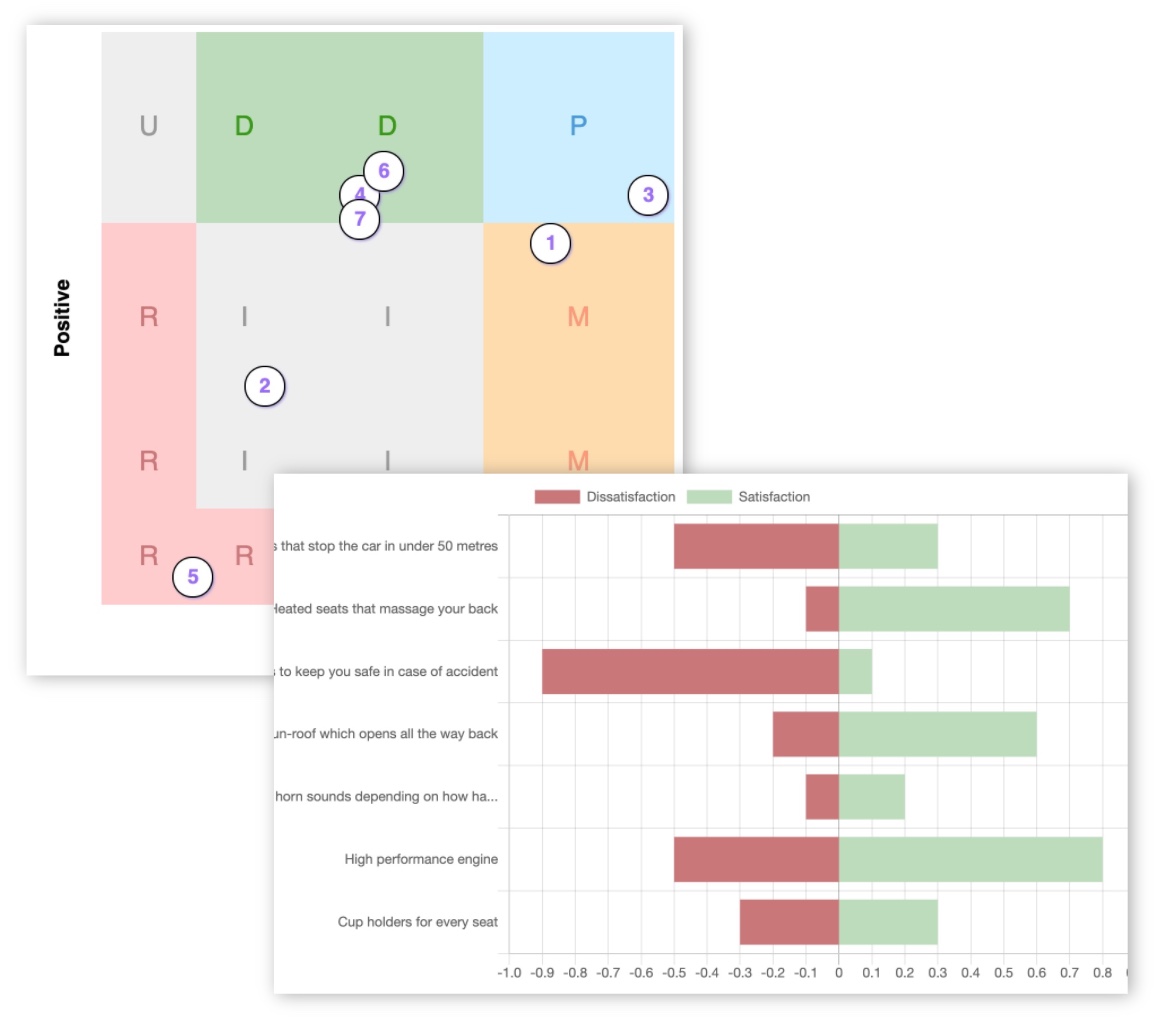
Indifferent Features in the Kano Model: Why Some Product Ideas Do Not Move the Needle
Indifferent features consume real product effort, but often make little difference to customer satisfaction, adoption, or loyalty.
The Kano Model helps product teams prioritise by impact, not by feature count. It separates ideas that protect trust, ideas that create measurable value, ideas that delight, and ideas that do very little.
This article focuses on Indifferent features: work that can consume serious design and engineering effort without changing customer satisfaction in a meaningful way.
Quick recap: the 5 Kano Model categories
The Kano Model groups product attributes into five categories:
- Must-have: baseline expectations. Missing them creates dissatisfaction.
- Performance: better delivery generally creates higher satisfaction.
- Delighters: unexpected value that creates a positive emotional response.
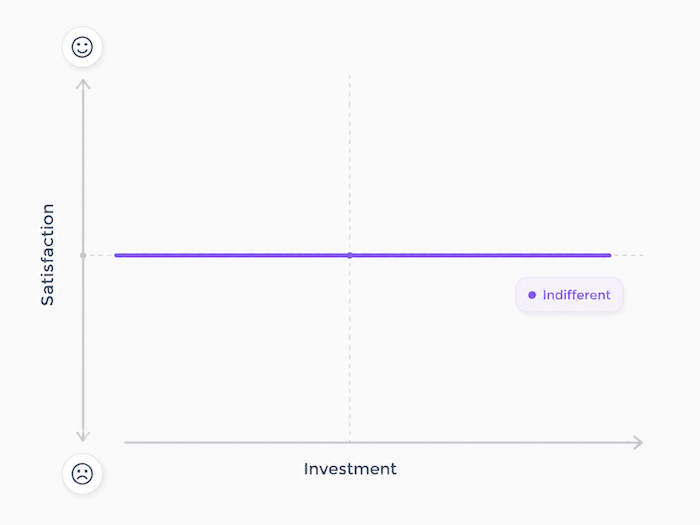
- Indifferent: little or no effect on satisfaction whether present or absent.
- Reverse: features some users actively dislike.
Indifferent is often the most underestimated category because ideas in this group can still sound "useful" in planning meetings.
What are Indifferent features?
Indifferent features are product attributes that have little or no meaningful impact on customer satisfaction, whether they are present or absent.
Customers may understand the idea and even react positively in conversation, but they do not change behaviour because of it. Adoption, retention, conversion, and day-to-day workflow usually remain the same.
In Kano surveys, these features often appear as neutral responses in both the functional and dysfunctional questions.
You might also hear this category called:
- Neutral features
- Low-impact features
- Non-value-adding features
- "Nice, but irrelevant" features
Indifferent does not mean "badly built." A feature can be polished and technically strong yet still not matter enough to justify roadmap priority. Context matters: the same feature can be Indifferent for one segment and high-value for another.
The psychology behind Indifferent features
Customers do not reward products for having the most features. They reward products that help them complete important jobs with less effort, risk, or confusion.
Indifferent features usually fail one of four tests:
- They solve a problem users rarely experience.
- They sit too far from the core job-to-be-done.
- They add cognitive load without clear payoff.
- The benefit is too subtle for users to notice.
There is also an internal bias risk: teams often like features that are fun to design or easy to demo. That can create a false sense of value. If users do not perceive meaningful improvement, CSAT usually does not move.
Indifferent work can even reduce satisfaction indirectly by cluttering navigation, increasing setup complexity, or slowing performance over time.
Why Indifferent features are not necessary in your product
Every feature has a full lifecycle cost: design, engineering, QA, docs, onboarding, support, maintenance, and eventual refactoring. Shipping is the start of that cost, not the end.
Indifferent features are expensive mainly because of opportunity cost. The same time could strengthen a Must-have, improve a Performance driver, or build a Delighter that differentiates your product.
Products feel mature when they are focused, not crowded. Too many low-impact features dilute positioning and make the core value harder to find.
Examples of Indifferent features
Examples depend on audience and context, but common patterns include:
- Advanced theme controls in a B2B admin tool where users care about speed and reporting.
- Complex dashboard widgets that look impressive but do not change decisions.
- Rare export formats, extra settings, or badges that most users ignore.
- Decorative hardware elements that do not improve reliability, durability, or ease-of-use.
A feature can still be valuable for a small segment. The key decision is strategic: does that segment matter enough to justify priority now?
How Indifferent features appear in product teams
Indifferent features usually enter roadmaps through familiar paths:
- Competitor copying without evidence that users care.
- Internal enthusiasm replacing customer validation.
- Prioritising one loud request as if it represents the whole market.
- Filling roadmap space with "could be useful" ideas.
These ideas are not always wrong. They are often just less important than work that clearly improves outcomes.
Tips for avoiding Indifferent features
Start with the user problem, not the feature concept. Before committing, define what should change if the idea succeeds: faster completion, fewer errors, higher confidence, higher retention, or another measurable outcome.
If expected impact is vague, validate first. Useful methods include interviews, prototype tests, fake-door experiments, usage analytics, and Kano surveys.
Segment your data. A feature that looks Indifferent overall can be high-value for one strategic audience. Decide intentionally whether that audience is worth prioritising now.
Use a hard comparison question in planning: "Is this one of the best things we could build next?" If not, defer it. Also remove low-value legacy options that add clutter without moving adoption or satisfaction.
Conclusion
Indifferent features are a useful filter, not a negative label. They help teams avoid spending scarce capacity on work users barely notice.
Before shipping any idea, ask two questions: would customers genuinely care if this existed, and would they notice if it disappeared?
If both answers are close to "no," treat that as strategic clarity. Focus effort on Must-haves, Performance improvements, and selective Delighters that customers clearly value.
Indifferent features in one sentence: Indifferent features are product ideas customers may tolerate or politely approve of, but that do little to improve satisfaction or change behaviour.
Key takeaway: If a feature does not solve an important user problem or create visible value, it probably should not outrank work that does.
Want a quick refresher on all five categories? See the Kano categories table.
Want to prioritise the features customers actually care about?
Create your first Kano survey now